How to tell if you have iron
Iron does not show up the same way in every well. Some homeowners see it first in the laundry. Some taste it before they see anything. Some only notice when a new appliance arrives and the manufacturer asks about water quality. The most reliable signs:
- Orange or reddish-brown staining on tubs, toilets, sinks, dishwashers, and white laundry. The rusty rim around the waterline of a toilet tank is iron oxidizing in standing water. Laundry staining shows up worst on white cottons.
- A metallic, slightly bitter taste — especially in cold water straight from the tap. Coffee, tea, and ice cubes taste "off." Some people describe it as a coppery or blood-like flavor.
- Water that looks clear from the tap but turns yellow or brown after sitting in a glass for a few minutes. This is dissolved (ferrous) iron oxidizing into rust (ferric) as it hits the air.
- Reduced flow over time as iron deposits build up inside pipes, water heaters, and aerator screens. A faucet that has slowly gotten weaker over years is often clogging with iron.
- A slimy, gelatinous reddish-brown buildup inside toilet tanks, on faucet aerators, or in pipes — particularly in wells that sit unused for periods. This is iron bacteria, and it is a separate problem from regular iron.
Any one of these is a reason to test. Two or more is a reason to test soon. Iron is not a health risk at the levels found in most wells, but it is destructive to plumbing and appliances, and the longer it goes untreated the more it costs to undo the damage.
The three forms of iron in well water
"Iron in water" is not a single problem. There are three distinct forms that show up in residential wells, and the treatment that works for one does not work for the others. Identifying the form you have is the most important step before buying any equipment.
Ferrous iron — the invisible kind
Ferrous iron (Fe²⁺) is dissolved in water and is not visible. Water with ferrous iron comes out of the tap looking clear. It only turns color after sitting for a few minutes, as oxygen converts it to the rust form. Most iron in southeast Michigan deep wells is ferrous — the aquifer water has very little dissolved oxygen, which is what keeps iron in its dissolved state.
Ferric iron — the rust kind
Ferric iron (Fe³⁺) is iron that has already oxidized into rust particles. Water with ferric iron comes out of the tap already cloudy or tinted, with visible orange or red particles. This is common in shallower wells, wells with exposure to air, and wells where ferrous iron has been oxidizing inside the plumbing for years.
Iron bacteria — the slimy kind
Iron bacteria are living organisms that feed on iron in the water, producing a slimy reddish-brown biofilm. They are not a health hazard but they are aggressive — they clog plumbing, foul softener beds and iron filters, accelerate corrosion, and produce a distinctive swampy odor. Iron bacteria can establish themselves during well installation, pump replacement, or any event that introduces surface contamination into the well.
Where southeast Michigan iron comes from
Iron in well water is almost always natural. It comes out of the rocks and soil the groundwater passes through. In southeast Michigan, two things make iron more likely than in many other regions:
Glacial geology
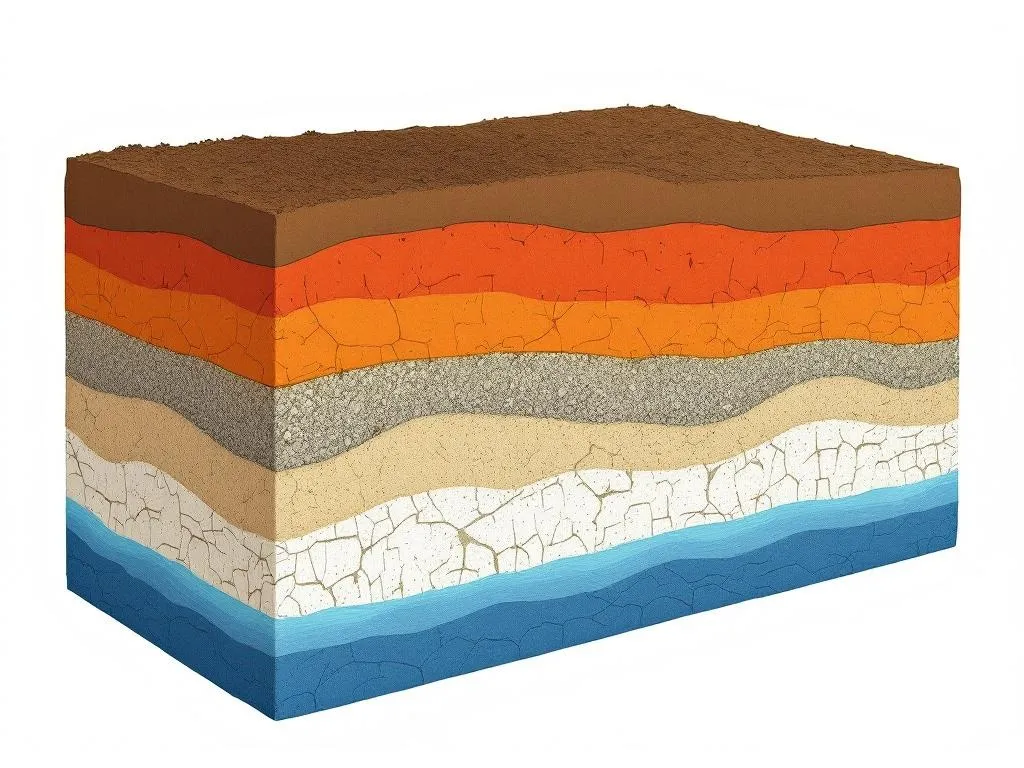
The aquifers under Washtenaw and Livingston Counties were formed by glaciers grinding through iron-rich bedrock and depositing those minerals across the region as glacial till. As rainwater percolates through the till and into the aquifer, it picks up iron in dissolved form. The same geology that produced the area's productive agricultural soil also produced its iron-rich groundwater.
Low-oxygen aquifer water
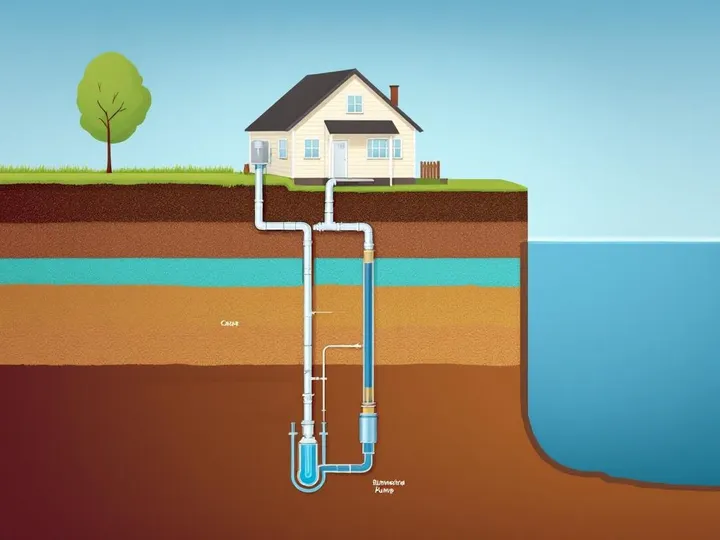
Most southeast Michigan residential wells draw from aquifers 80 to 200 feet down — deep enough that the water carries very little dissolved oxygen. Low-oxygen water dissolves iron readily and holds it in solution. When that water reaches the surface and meets air, the iron oxidizes — which is why you see the rust color in the toilet bowl rather than in the well casing.
Because iron in this region is geological rather than industrial, iron levels are usually stable year over year. They can shift after major well work, after a long unused period, or if the well begins drawing from a different stratum due to drawdown — but a Cribley well log from the 1980s and a fresh test today usually agree within a reasonable range. That stability is useful for planning treatment.
EPA standards and how to test
Iron is regulated under the EPA's secondary drinking water standards, which cover aesthetic and infrastructure concerns rather than health. Iron is not toxic at the levels found in well water — the standards exist because of staining, taste, and plumbing damage.
A proper iron test is not just one number. To pick the right treatment, the test should distinguish:
- 01Total iron concentration in mg/L.The number itself. Anything below 0.3 mg/L is usually unobjectionable. From 0.3 to 1 mg/L, staining and taste become noticeable. Above 1 mg/L, treatment is almost always warranted. Above 5 mg/L, treatment becomes more involved.
- 02Ferrous vs. ferric split.A well-collected sample analyzed quickly tells you what fraction is dissolved versus already oxidized. This determines whether oxidation-and-filtration or simple filtration is the better fit.
- 03Iron bacteria presence.A culture test or microscopic examination identifies iron bacteria. If they are present, shock chlorination of the well is usually the first step, before any treatment equipment goes in.
- 04Manganese, pH, and hardness as supporting data.Manganese behaves similarly to iron and is often present alongside it. pH affects how easily iron will oxidize during treatment. Hardness affects whether a softener is part of the solution. A treatment plan that ignores these usually under-performs.
Cribley collects iron samples during a service visit, sends them to a certified lab, and brings the results back with a written recommendation. We do not sell equipment first and test second.
Treatment by iron type
There is no single iron treatment that fits every well. The right equipment depends on the form of iron, the concentration, the pH, and what else is in the water. The four approaches that actually work for residential wells:
Oxidation & filtration — the workhorse
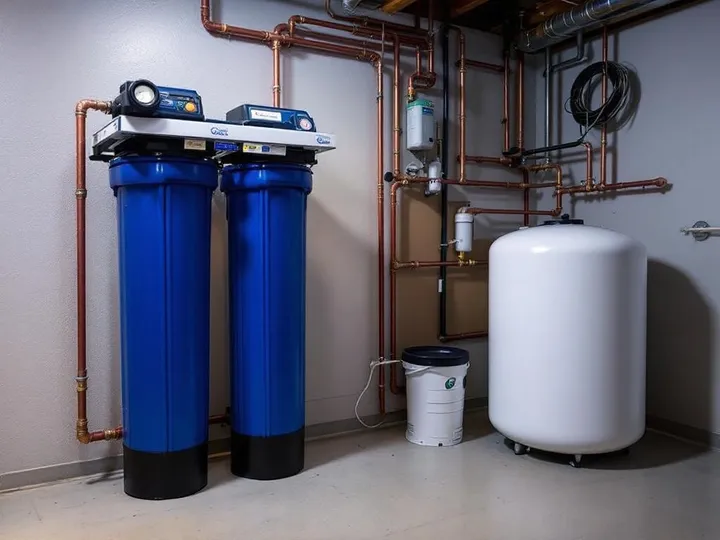
For most southeast Michigan wells with ferrous iron between roughly 0.5 and 10 mg/L, an oxidation-and-filtration system is the standard answer. Water is exposed to an oxidizer — air injection, ozone, or a manganese-dioxide-coated media bed that catalyzes oxidation — which converts dissolved ferrous iron into rust particles. The particles are then trapped on a filter bed that backwashes itself on a schedule. No salt, no chemicals to refill.
Air-injection systems (sometimes called AIO or Iron Curtain-style) are particularly well-suited to SE Michigan groundwater because they handle hydrogen sulfide and manganese at the same time. A single tank handles iron, sulfur smell, and manganese — three of the four most common complaints — without consuming salt or chemicals beyond periodic media replacement.
Water softener — only for low ferrous iron
A standard ion-exchange water softener will remove ferrous iron up to roughly 2 to 3 mg/L as part of its normal operation. Above that, the resin bed becomes overwhelmed and starts to foul. A softener cannot remove ferric (rust) iron or iron bacteria — those damage the resin instead of being removed by it.
For households with low-level ferrous iron and high hardness, a softener can be the right single piece of equipment. For anything more than that, the softener should be paired with an iron filter ahead of it, with the iron filter doing the iron removal and the softener handling hardness.
Chemical oxidation — for high iron or sulfur
When iron concentrations are high (above roughly 10 mg/L), or when iron is paired with significant sulfur, a chemical injection system uses a metered feed of chlorine or peroxide to oxidize the iron before filtration. These systems are more capable but require more maintenance: refilling the chemical tank, periodic checks of the metering pump, and contact-tank cleaning.
Shock chlorination — for iron bacteria
Iron bacteria are treated by chlorinating the well itself — a calculated dose of chlorine introduced into the well, circulated through the plumbing, and left to contact the entire system for several hours before being flushed. Done correctly, shock chlorination kills the bacterial colony. Done casually, it knocks the colony back temporarily and the bacteria recolonize within months. Recurring iron bacteria usually means the source of contamination — a faulty cap, surface water entry, a cross-connection — needs to be identified and fixed alongside the chlorination.
What does not work
Pitcher and refrigerator filters do not remove meaningful amounts of iron — they clog quickly and stop working. Reverse osmosis at the kitchen sink helps drinking water but does nothing for the laundry, the dishwasher, or the bathroom fixtures. Acid "rust removers" applied to fixtures clean the stains but do not address the source. The well water keeps depositing fresh stains until the iron is treated at the source.
Test before you treat
If you are seeing iron stains, tasting metal, or watching laundry come out worse than it went in, the first step is a real water test — not a softener salesman. The test tells you which form of iron you have, how much of it, and what else is going on alongside it. The equipment recommendation comes from the data.
Cribley serves Washtenaw and Livingston Counties and has been drilling and treating wells in this specific geology since 1946. If you are not sure what is in your well — or you have been told "you need a softener" without anyone running a test — we can collect a sample and tell you what is actually there.
Find out what's actually in your water.
Cribley collects the sample, runs the right tests for iron, and walks you through the results before recommending any equipment. No softener pitch — just data and a plan.