


What are PFAS?
PFAS stands for per- and polyfluoroalkyl substances. The name covers a large family — more than 12,000 individual compounds — all sharing a carbon-fluorine chemical bond that is among the strongest in organic chemistry. That bond is why PFAS do not break down in the environment. They do not break down in your body either, which is why the term "forever chemicals" has stuck.
PFAS were used widely from the 1950s onward in products that need to resist water, oil, and heat: non-stick cookware (Teflon), food packaging, stain-resistant fabric treatments, waterproof clothing, and most significantly for groundwater contamination, aqueous film-forming foam (AFFF) — the firefighting foam used at airports and military bases.
The most studied PFAS compounds are PFOA (perfluorooctanoic acid) and PFOS (perfluorooctanesulfonic acid). Both have been largely phased out of manufacturing, but they persist in soils and groundwater at sites where they were used decades ago. Newer PFAS compounds used as replacements are also being detected and regulated, though the research on their health effects is less complete.
Michigan's PFAS problem
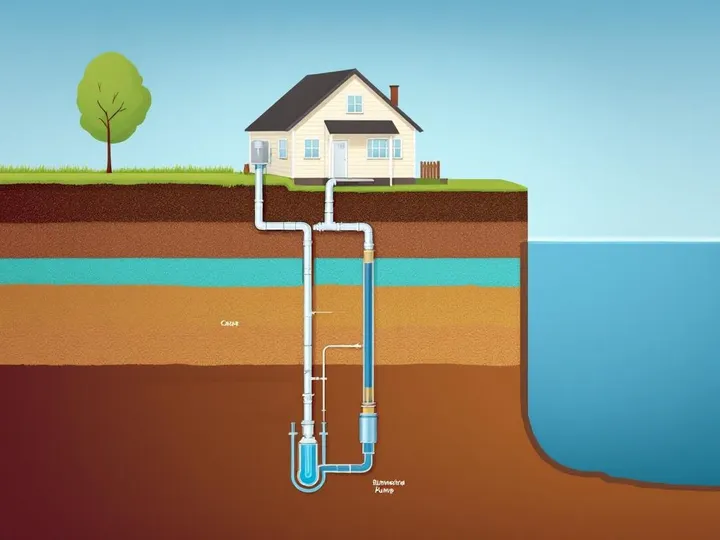
Michigan has identified PFAS contamination at more than 200 sites statewide, making it one of the states with the most documented contamination in the country. The Michigan EGLE (Environment, Great Lakes, and Energy) maintains a public map of confirmed and suspected PFAS sites. The contamination is not evenly distributed — it clusters around specific source types.
Major PFAS sources in Michigan
- Military and former military installations.Wurtsmith Air Force Base (Oscoda), Selfridge Air National Guard Base, and other sites used AFFF firefighting foam in training exercises for decades. Groundwater contamination from these sites has migrated into surrounding communities' private wells and municipal supplies.
- Industrial manufacturing sites.Michigan's industrial history includes chemical and plastics manufacturing that used PFAS-containing materials. Sites near Ann Arbor — including former 3M and chemical processing facilities — have been subjects of PFAS investigation.
- Airport firefighting operations.Commercial airports using AFFF foam have created contamination plumes affecting nearby groundwater. Several airport-area communities in Michigan have documented well contamination.
- Landfills and wastewater treatment plants.PFAS from consumer products concentrate in landfill leachate and sewage sludge. Landfills and land-application sites for biosolids (treated sewage) are confirmed PFAS sources in multiple Michigan counties.
For well owners in Washtenaw and Livingston Counties, the relevant concern is proximity to any of these source types, and the behavior of groundwater plumes — which can travel significant distances from the original contamination site over years and decades.
Health risks and federal standards
The health evidence on PFAS has grown substantially over the last decade. The compounds are associated with a range of effects including disruption of thyroid hormone function, immune system suppression (including reduced vaccine effectiveness in children), elevated cholesterol, and increased risk of certain cancers — particularly kidney and testicular cancer.
Regulatory action has accelerated significantly. The EPA established enforceable maximum contaminant levels (MCLs) for individual PFAS compounds:
For private well owners, these federal standards represent the best available science on safe levels. Testing your well against these thresholds is the only way to know whether action is needed. There are no symptoms of PFAS exposure — contamination at concerning levels is entirely undetectable without laboratory analysis.
How to test your well for PFAS
PFAS testing requires a certified laboratory — standard coliform and mineral water tests do not detect PFAS. The process:
- 01Use a state-certified laboratory.Michigan EGLE maintains a list of certified labs for PFAS analysis. Testing typically costs between $150 and $400 depending on the number of compounds analyzed. A full PFAS panel (50+ compounds) costs more than a targeted test for the six EPA-regulated compounds — both have their place depending on your risk profile.
- 02Sample collection matters.PFAS testing requires collection in specific lab-supplied bottles, often pre-cleaned and preserved. Do not use standard water sampling bottles. Most labs ship a collection kit. Cribley can collect a proper sample during a service visit.
- 03First-draw sampling.For wells, PFAS samples are typically collected as a first-draw sample after the well has not been used for several hours — this represents water that has been sitting in the system and reflects the well's true contamination status, rather than water flushed through active lines.
- 04Interpret results carefully.Results below the EPA MCL are not necessarily zero contamination — they are below the currently enforceable threshold. Some health-based guidance values (e.g., from the Michigan EGLE or health department) are lower than the federal MCL for certain compounds. Discuss results with Cribley or your local health department.
Cribley offers water testing through its Champion Water Treatment operation. We can collect your sample during a scheduled visit, submit it to a certified lab, and explain the results when they come back. We test for a comprehensive PFAS panel — not just the minimum — because partial testing misses compounds.
Treating PFAS in well water
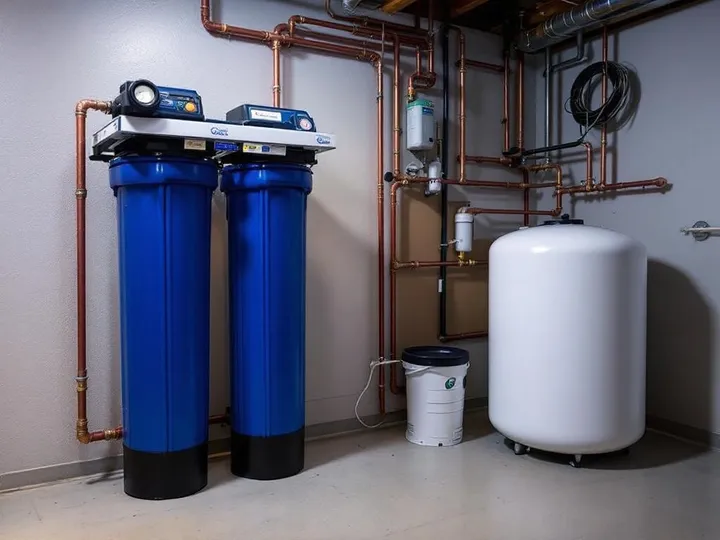
If your well tests above action levels for PFAS, treatment is available. The two primary technologies proven effective for PFAS removal are reverse osmosis (RO) and granular activated carbon (GAC) filtration. They work differently and suit different situations.
Reverse osmosis — the most effective option for PFAS
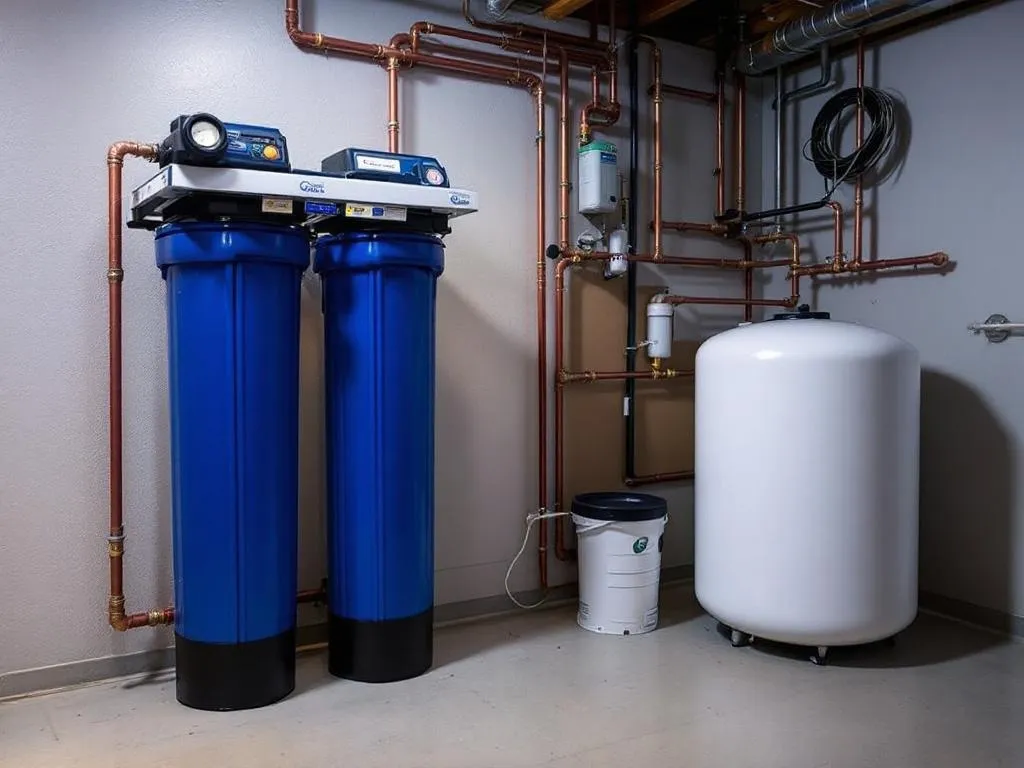
RO systems force water through a semi-permeable membrane under pressure. The membrane rejects PFAS molecules, reducing concentrations by 90% or more for most PFAS compounds. Point-of-use RO systems — installed under the kitchen sink — treat drinking and cooking water at the tap. Whole-house RO systems treat all water entering the home.
For most private well owners with PFAS detection, a point-of-use RO system is the practical first step. It addresses the primary exposure pathway — drinking water — at a cost of $300 to $800 installed, plus filter maintenance. The membranes and pre-filters require periodic replacement.
Granular activated carbon — whole-house reduction
GAC filters use activated carbon to adsorb PFAS from water as it passes through. GAC is effective at reducing longer-chain PFAS compounds (PFOA, PFOS) and can be configured for whole-house use, treating all water entering the home. It is generally less effective than RO for shorter-chain PFAS compounds and requires regular carbon replacement to maintain effectiveness.
GAC is not a substitute for RO when PFAS concentrations are elevated above action levels. It is more appropriate as a secondary protection measure, or for lower-level detections of longer-chain compounds. Cribley will recommend the appropriate combination based on your test results.
What does not work
Standard pitcher filters (Brita, Pur) and sediment filters do not remove PFAS. Water softeners do not remove PFAS. UV disinfection systems do not remove PFAS. If PFAS is your concern, the treatment system must be specifically designed and sized for PFAS removal.
If you have not tested your well for PFAS
Private well owners in southeast Michigan — particularly within 10 miles of any known PFAS site — should have tested their well water within the last three years. Given the pace of new site identification in Michigan and the migration of existing contamination plumes, annual testing is reasonable for high-risk locations.
If you are not sure whether your property is near a PFAS source: check the EGLE PFAS response map, ask your county health department, or call Cribley. We serve Washtenaw and Livingston Counties and know the contamination geography of these specific areas.
Schedule a PFAS water test for your well.
Call Cribley or use the contact form. We collect the sample properly, use certified labs, and explain what the results mean for your household — before recommending any equipment.