
Before the truck arrives
A new well project in Michigan moves through five distinct phases: permit and site evaluation, site preparation, rotary drilling, casing and grouting, and finally pump installation with water quality testing. The actual drilling takes one to three days depending on depth and geology. The permit process takes longer — typically two to three weeks after Cribley files with the county.
Understanding the sequence matters because it tells you when to plan for driveway access, when the noise starts, and when you can expect water from the tap. It also helps you ask better questions when something does not go exactly as expected.
Site evaluation and permit filing
Before anything gets drilled, Cribley visits the property to assess where a well can be located. Michigan law specifies minimum setback distances from septic systems, property lines, fuel storage, and other potential contamination sources. The site evaluation identifies a location that meets those requirements and gives the drill rig reasonable access.
Once the location is confirmed, Cribley files the well permit with the county health department — Washtenaw Environmental Health or the Livingston County Health Department, depending on the property. Permits require the property address, parcel number, proposed well location, intended use, and contractor license information.
Michigan requires that all water well permits be filed before drilling begins. There are no shortcuts here — a well drilled without a permit creates legal liability for the property owner and may not be recognized by title insurance.
Site preparation
When the permit is in hand and the drill date is scheduled, site preparation begins. This is typically a half-day process the morning of the first drilling day, or the day before on large properties.
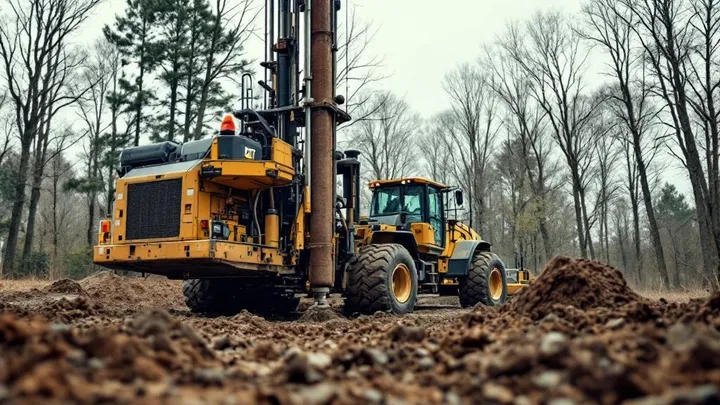
The drill rig is a heavy truck — clearing access is the main practical requirement. Cribley will walk the driveway approach with you to identify any obstacles: soft soil areas where a heavy rig could sink, low-hanging branches, tight turns, or buried irrigation lines. Damage to landscaping during this phase is minimal in most cases, but we will discuss the access path before moving equipment.
A drilling pad of 20 to 30 feet is cleared around the well location to allow the rig to set up and for the drilling crew to work safely. On properties with established landscaping, we discuss how to minimize disturbance before equipment moves in.
Rotary drilling to the aquifer
Cribley uses rotary drilling rigs. A rotating drill bit grinds through rock, clay, and sand layers while a drilling fluid — typically water, sometimes with bentonite additives — keeps the borehole stable and carries cuttings up and out of the hole.
The drill penetrates layers of soil, glacial clay, sand and gravel formations, and eventually bedrock or a productive aquifer zone. In southeast Michigan, most residential wells reach their primary aquifer in sand and gravel formations at depths between 80 and 200 feet. Some areas — particularly in parts of Livingston County — require drilling deeper into the bedrock aquifer.
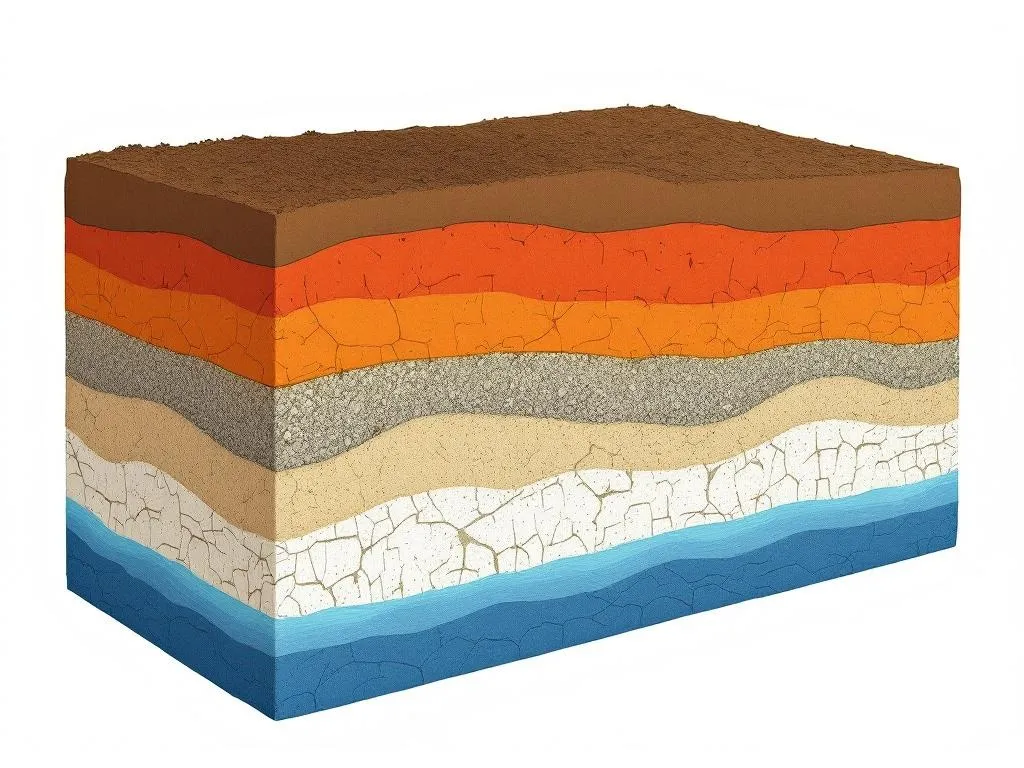
The driller monitors the cuttings coming up from the borehole continuously. When the formation changes from dense clay or rock to water-bearing sand and gravel, the driller recognizes it from the cutting samples and from the behavior of the drilling fluid returning to the surface. At this point, a water sample is taken and flow is measured to assess the aquifer's productive capacity.
Typical drilling days run from early morning to late afternoon. On a well reaching 150 feet in a cooperative formation, one day of drilling is common. Difficult geology — hard bedrock, unexpected clay layers, or collapsed formations — can extend the drilling phase to two or three days.
Steel casing and bentonite grouting
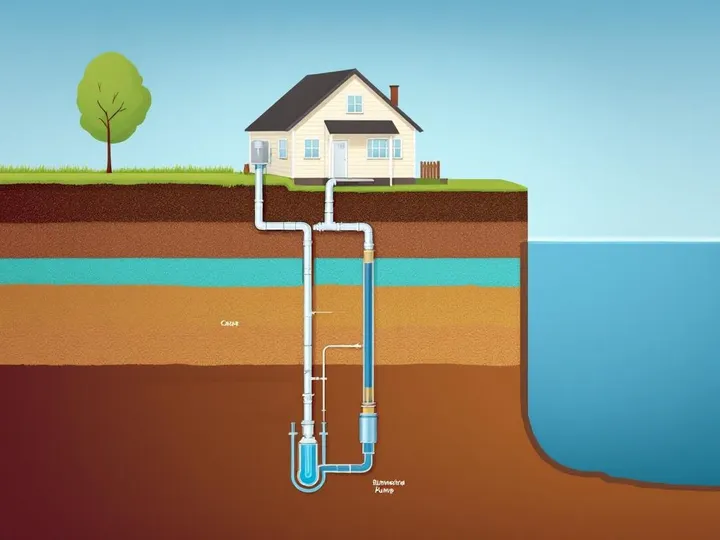
Once the aquifer is reached and flow confirms a productive zone, steel casing is installed. Casing is the pipe that lines the borehole from the surface down through the upper formations, protecting the well from surface contamination and structural collapse.
Michigan requires that well casing extend above the ground surface — typically 12 inches — to prevent surface water from entering the well. At the surface, the casing terminates with a watertight well cap.
Between the outside of the steel casing and the borehole wall, bentonite grout is pumped from the bottom up. Bentonite is a clay mineral that swells on contact with water, creating a permanent seal that prevents surface water and shallow groundwater from migrating down alongside the casing and into the aquifer. This grouting step is critical to long-term water quality — it is the primary protection against contamination of the well from surface sources.
Pump installation and water quality testing
With the casing set and grouted, the well is ready for the pump. Most residential wells in southeast Michigan use submersible pumps — electric pumps installed on the bottom of a drop pipe, submerged in the water column inside the casing. Submersible pumps are efficient, quiet, and last 10 to 20 years with proper maintenance.
The pump is sized to match the well's yield and the household's expected demand. Cribley selects the pump based on the measured flow rate from the well test, the static and pumping water levels, and the total head the pump needs to overcome to deliver water to the house.
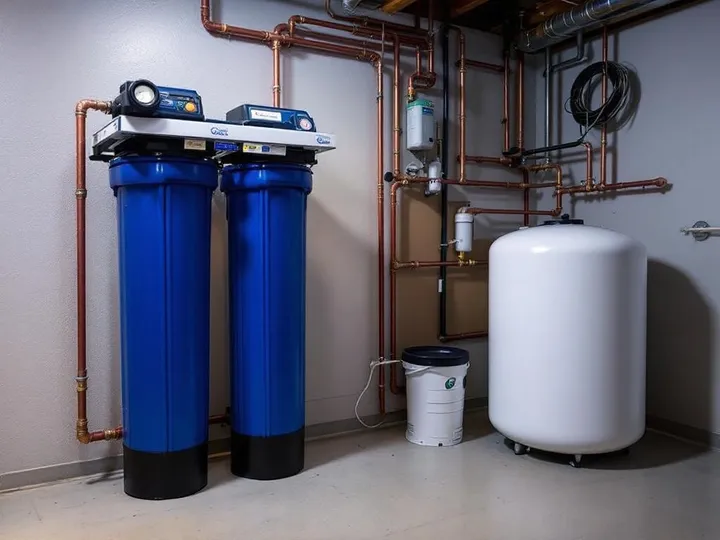
At the pressure tank inside the home or utility area, Cribley installs and calibrates the pressure tank and pressure switch. The pressure tank stores a reserve of water under pressure, reducing the frequency with which the pump needs to cycle on and off and protecting the pump from wear.
Before leaving the site, Cribley collects a water sample from the new well and submits it to a state-certified laboratory for analysis. Michigan requires testing for coliform bacteria and nitrates at minimum on all new wells. Cribley tests for an expanded panel — including common Michigan groundwater contaminants such as iron, manganese, hardness, and pH — so you have a complete baseline picture of your water quality from day one.
Total timeline and what to expect
From first contact to water flowing from your tap: allow three to five weeks for most new well projects, accounting for permit processing time. The active work on your property typically spans two to three days.
- Phase 01Site evaluation — half-day visit to assess well locationDay 0
- Phase 01Permit filing — Cribley files same weekWeek 1
- Phase 01Permit approval — county processing time2–3 weeks
- Phase 02–04Drilling on site — including casing & grouting1–3 days
- Phase 05Pump installation — submersible pump & pressure tank½–1 day
- Phase 05Water test results — lab analysis turnaround5–7 days
Questions about your specific property, soil type, or expected depth are worth asking before the permit is filed. Cribley can often give you a reasonable depth estimate based on nearby well records — which we have in our files going back to 1946.
Talk to Cribley about your property — before the permit is filed.
We pull records from wells drilled near your address and tell you what to expect at your specific depth, soil, and aquifer profile.